
Selling Handicrafts Online: A Practical Guide for Rural Women Artisans and SHGs
Rajasthan's women artisans make beautiful block prints, bandhej, pottery, lac bangles and embroidery. Selling online can bring them fairer prices and customers far beyond the local haat.
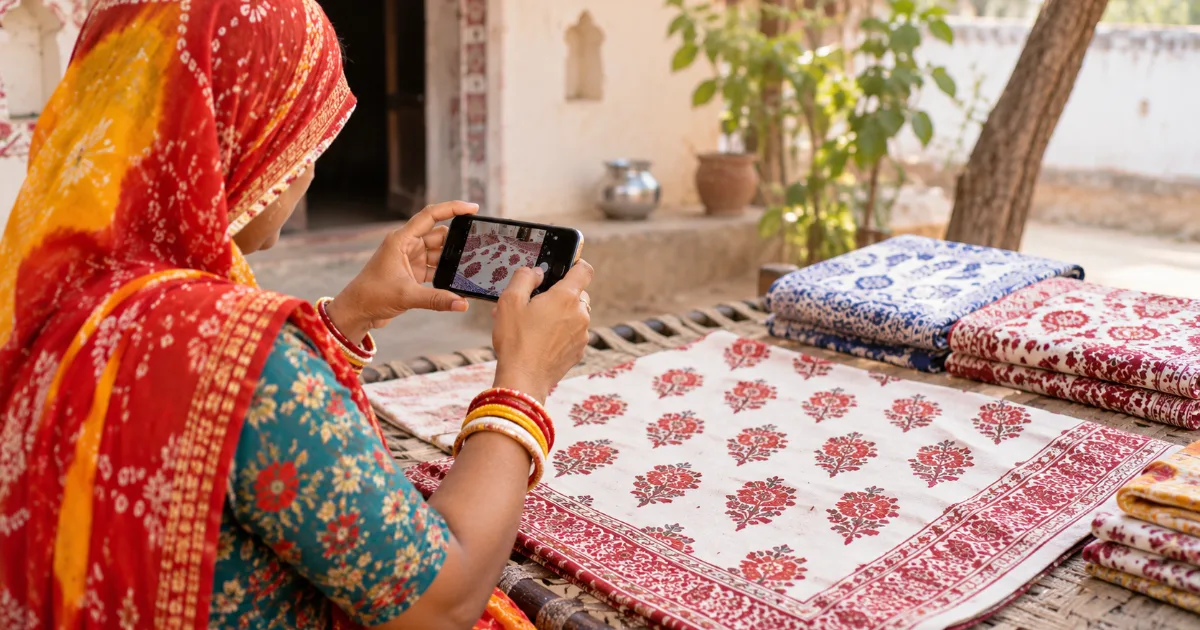
Why go online
Selling online helps artisans reach buyers in other cities and countries, reduces dependence on middlemen and lets them sell all year rather than only at fairs. For self-help groups (SHGs), it can turn a seasonal activity into a steady livelihood.
Get the basics right
- Good photos: natural daylight, a plain background, close-ups of texture and one photo showing size
- Clear descriptions: material, size, colour, care instructions and the story of the craft
- Consistent quality across pieces, with simple quality checks before dispatch
- Sturdy, attractive packaging that protects fragile items
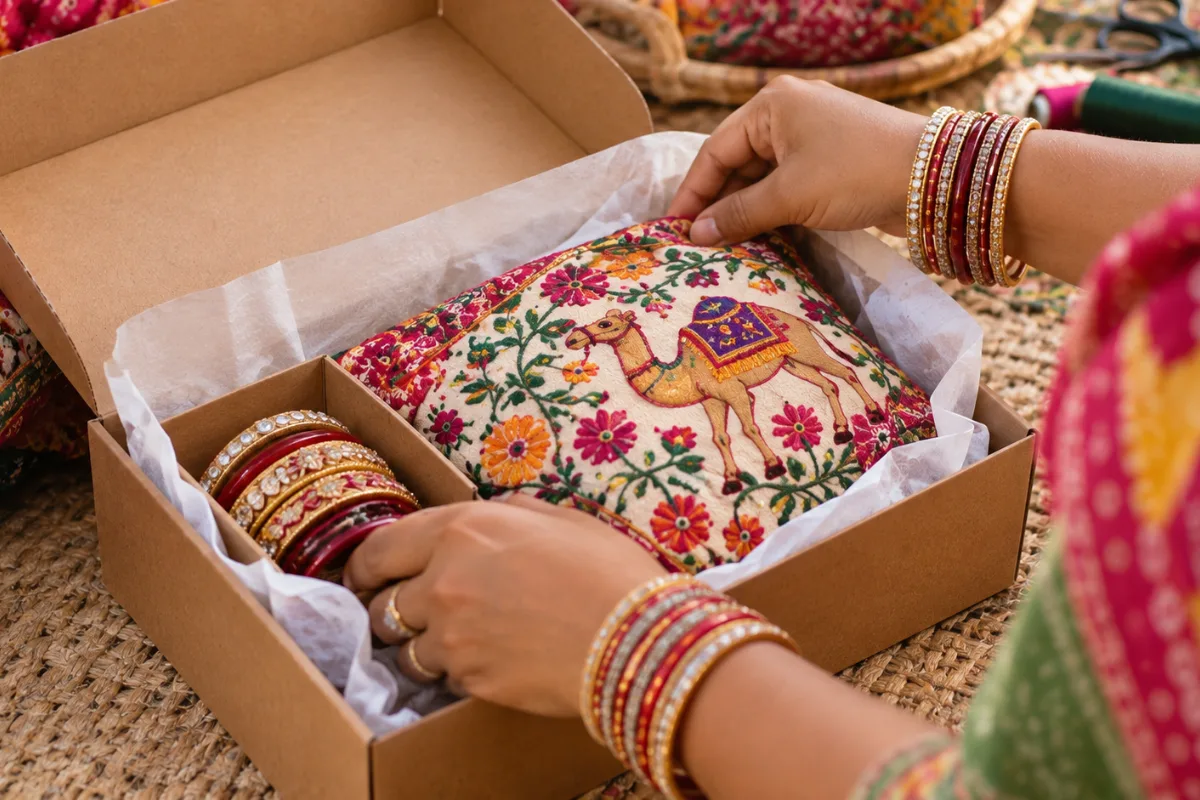
Price for profit
Calculate the full cost — raw material, labour hours, packaging, platform fees, shipping and returns — and then add a fair margin. Do not under-price handmade work; buyers who value handicrafts expect to pay for quality. Keep simple records of every sale, as explained in our guide to [SHG record-keeping](https://mayagodara.com/insights/shg-record-keeping-bookkeeping-guide).
Where to sell
Options include government platforms such as the Government e-Marketplace (GeM) for sales to government buyers, the Open Network for Digital Commerce (ONDC) through participating seller apps, state handicraft emporium programmes, social media and messaging catalogues, and established online marketplaces. Many SHGs start with a WhatsApp or social media catalogue and add platforms as volumes grow. Registrations such as Udyam and, where needed, GST make it easier to work with larger buyers.
Payments, delivery and trust
- Use UPI and bank transfers and avoid sharing OTPs or PINs with anyone
- Use reliable courier services with tracking
- Respond to messages quickly and politely
- Ask happy customers for honest feedback and repeat orders
Support for artisans
Finance for working capital and equipment is discussed in our guide on [loan schemes for women entrepreneurs](https://mayagodara.com/insights/women-entrepreneur-loan-schemes-india-guide). [ATTPL Consultancy](https://consultancy.attplai.com/) supports registrations and business planning, and [ATTPL Agri](https://agri.attplai.com/) works with rural producer groups.
Maya's takeaway
Frequently asked questions
Can an SHG sell on government platforms?
Yes. SHGs and artisans can register on platforms such as GeM and participate in ONDC through seller apps, subject to eligibility and documentation.
How should handmade products be priced?
Add up all costs including labour, packaging, fees and shipping, then add a fair margin. Do not under-price handmade work.
Is GST registration needed to sell online?
It depends on turnover, the type of goods and the platform. Check current GST rules or ask a tax adviser.
Sources
This article is general information and a leadership perspective. It is not legal, financial, tax, medical or investment advice. Please consult a qualified professional for your situation. Facts and figures are taken from the public sources listed above and may change.
Maya Godara
Co-Founder & Managing Director, ATTPL HOLDCO / ATTPL GROUP, Jaipur, Rajasthan, India.
More from Maya Godara
Record-Keeping for Self-Help Groups: Simple Books That Build Trust
Which registers and books a self-help group should maintain, how to record savings, loans and meetings, and how good records help with bank linkage and grading.
Read the articleKitchen Gardens for Better Nutrition in Rural Families
How rural families can grow a kitchen garden (poshan vatika) for better nutrition: choosing plants, saving water, seasons and support.
Read the articleWomen and Property Rights: Why Joint Ownership Matters
Why property in a woman's name or joint name matters for rural families: equal inheritance, joint ownership, mutation, documents and practical steps.
Read the article