
Kitchen Gardens for Better Nutrition in Rural Families
Many rural families grow crops for sale but buy very few vegetables for themselves, especially in dry months. A small kitchen garden, or poshan vatika, near the house can provide fresh greens, vegetables and fruits through much of the year. It improves the diet of children and women, saves money and can be managed with very little water using household waste water.
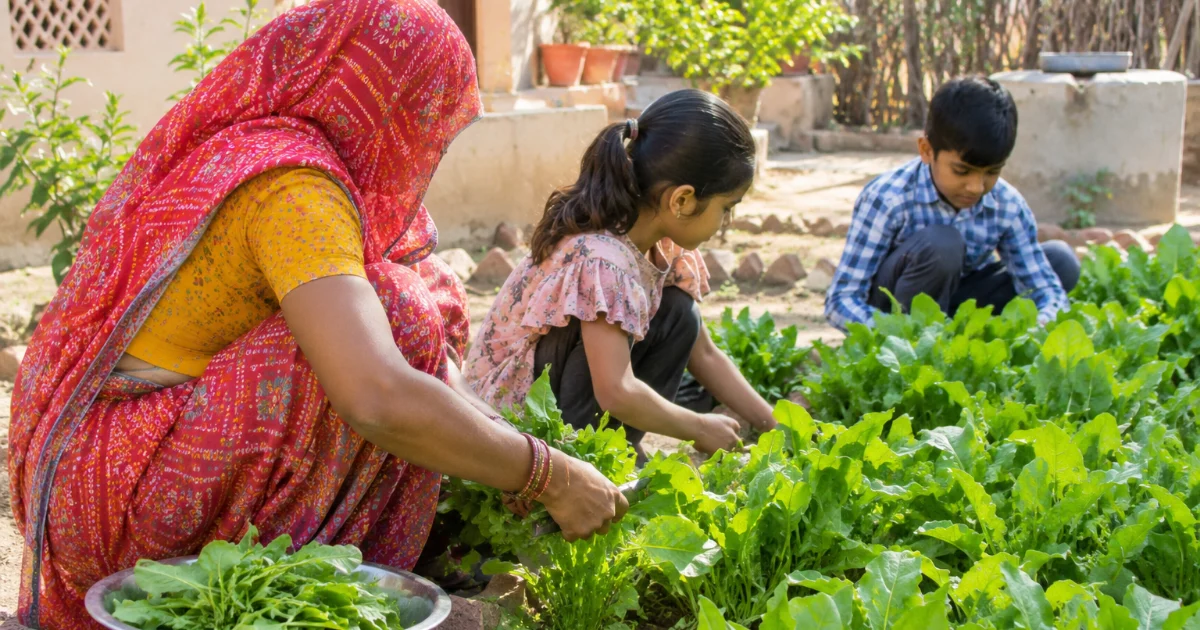
Why kitchen gardens matter
- Fresh vegetables and greens add iron, vitamins and fibre to daily meals.
- Women and children, who often face anaemia, benefit most.
- Families save money on buying vegetables.
- Surplus can be shared or sold locally.
Our guide to [nutrition for mothers and children](/insights/nutrition-for-mothers-and-children-rural-guide) explains which foods matter most.
Planning the garden
Choose a sunny spot near the house where kitchen and bathing water can be directed. Even a small plot can produce a lot if it is planned well. Mix leafy greens, vegetables, a few fruit plants such as papaya, lemon or drumstick (moringa), and herbs. Fence the area against animals.
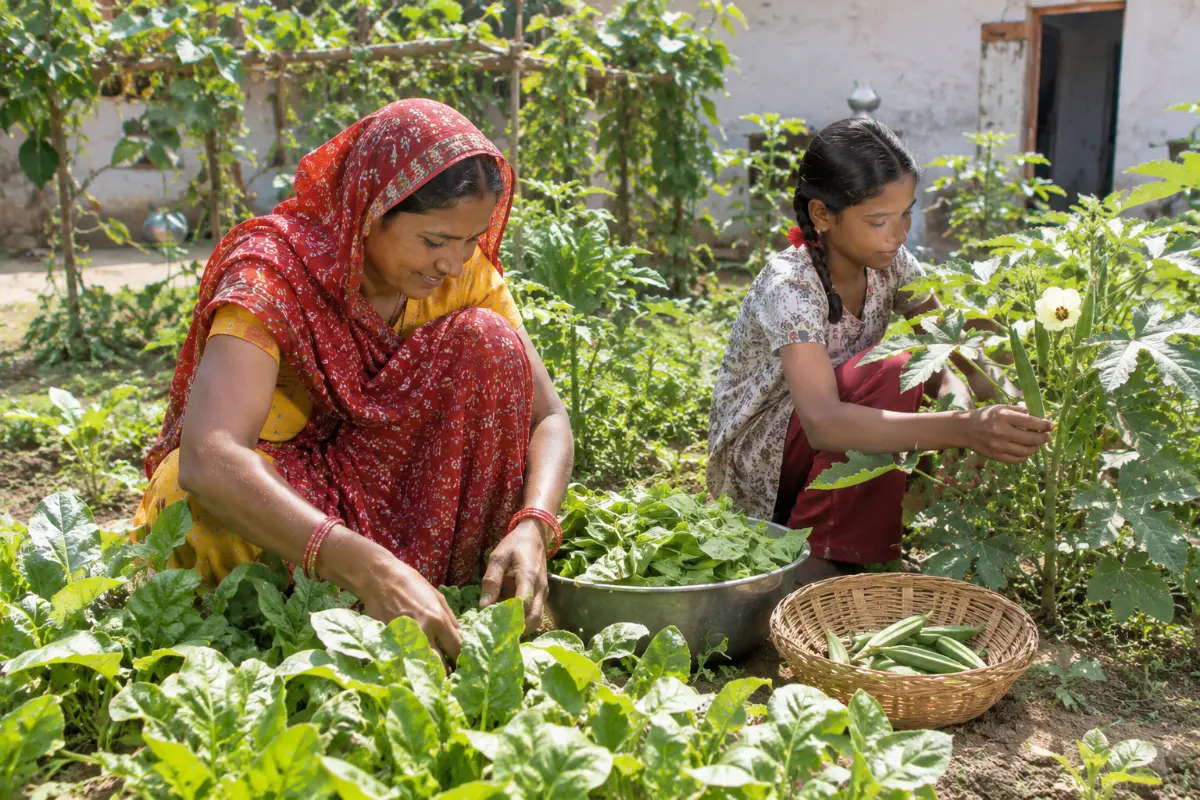
What to grow by season
- Rabi (winter): spinach, fenugreek (methi), mustard greens, carrot, radish, peas, tomato.
- Kharif (monsoon): okra (bhindi), bottle gourd, ridge gourd, cowpea, chillies.
- Summer: cucumber, pumpkin and heat-tolerant greens with careful watering.
- Perennials: moringa, papaya, lemon, curry leaves.
Saving water and inputs
Reuse kitchen and bathing water (without harsh detergents) for plants. Mulch the soil with dry leaves or straw to keep moisture in. Make compost from kitchen waste and dung; ATTPL Agritech explains [vermicompost making](https://agri.attplai.com/blog/vermicompost-making-guide-farmers). Saving your own seeds from healthy plants reduces costs year after year.
Women and groups leading the way
Women's self-help groups in many villages run kitchen garden campaigns, share seeds and train members. Anganwadi centres and schools can also maintain nutrition gardens to support mid-day meals and teach children. Our article on [self-help groups and women leadership](/insights/self-help-groups-and-women-leadership-in-rural-rajasthan) shows how groups organise such efforts.
Simple pest care without chemicals
Kitchen gardens should produce safe food, so avoid chemical pesticides wherever possible. Mixing different plants, removing affected leaves early, and using traditional sprays such as neem-based solutions recommended by agriculture staff can control many pests. Marigold plants along the edges attract some pests away from vegetables. Healthy soil with compost produces stronger plants that resist pests better.
Making the most of the harvest
- Pick greens young and often so plants keep producing.
- Share surplus with neighbours or exchange vegetables.
- Dry extra greens such as methi in shade for later use.
- Save seeds from the best plants for the next season.
Cooking methods matter too: avoid overcooking greens and add a little lemon or amla to meals to help the body absorb iron.
Getting children involved
Children enjoy sowing seeds, watering plants and watching them grow. Involving them in the kitchen garden teaches where food comes from and encourages them to eat vegetables they helped grow. Schools and anganwadis can give each child a small plant to care for. These habits often last a lifetime.
Getting support
Agriculture departments, KVKs and nutrition campaigns such as Poshan Abhiyaan sometimes provide seed kits and training; ask your local anganwadi or agriculture office about current programmes. Farming and water-saving advice is available from [ATTPL Agritech](https://agri.attplai.com/blog), and small solar pumps for gardens from [ATTPL Solar](https://solar.attplgroup.com/agriculture-solar/).
Maya's takeaway
A small kitchen garden near the home can bring fresh, nutritious food to the family plate all year, especially for women and children, at very low cost.
Frequently asked questions
How big should a kitchen garden be?
Even a small plot near the house can supply greens and vegetables if it is planned and maintained well.
Can waste water be used?
Yes, kitchen and bathing water without harsh detergents can be reused for plants.
Which plants give nutrition all year?
Perennials such as moringa, papaya, lemon and curry leaves, along with seasonal greens and vegetables.
Which vegetables grow easily in hot weather?
Okra, gourds, cowpea and cluster beans usually grow well in the warm season with regular watering.
Sources
This article is general information and a leadership perspective. It is not legal, financial, tax, medical or investment advice. Please consult a qualified professional for your situation. Facts and figures are taken from the public sources listed above and may change.

Maya Godara
Co-Founder & Managing Director, ATTPL HOLDCO / ATTPL GROUP, Jaipur, Rajasthan, India.
More from Maya Godara
Record-Keeping for Self-Help Groups: Simple Books That Build Trust
Which registers and books a self-help group should maintain, how to record savings, loans and meetings, and how good records help with bank linkage and grading.
Read the articleNutrition for Mothers and Young Children: A Rural Guide
Simple, affordable nutrition habits for pregnant women, new mothers and young children in rural families, and how anganwadi services can help.
Read the articleWomen and Property Rights: Why Joint Ownership Matters
Why property in a woman's name or joint name matters for rural families: equal inheritance, joint ownership, mutation, documents and practical steps.
Read the article