
Women and Property Rights: Why Joint Ownership Matters
In many villages, a woman works on the family's land every day, manages the household and raises the next generation, yet her name appears on no property document. Ownership is not just paperwork. It gives women security in difficult times, access to credit and government schemes, and a stronger voice in family decisions. Over the years I have seen how a simple change, adding a woman's name to the land or house papers, can change how she is treated and how confidently she plans for the future.
What the law says
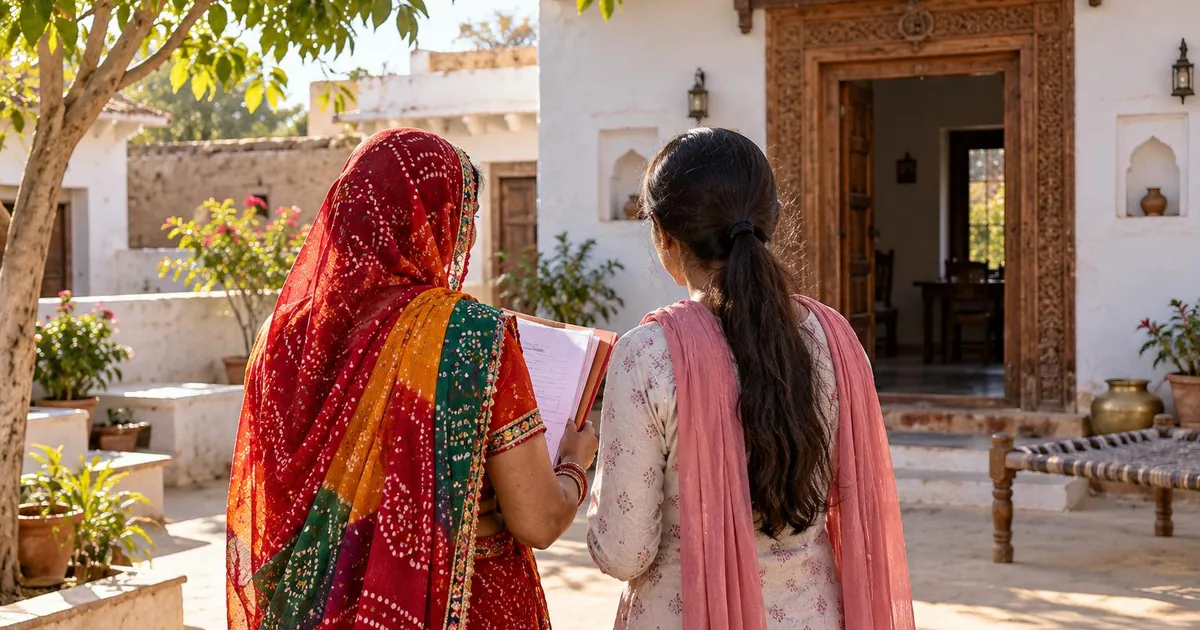
Indian law has moved steadily towards equal property rights for women. The Hindu Succession (Amendment) Act, 2005 made daughters coparceners in Hindu joint family property with the same rights as sons, and the Supreme Court has confirmed that daughters hold this right by birth. Widows and daughters also have rights in a deceased person's self-acquired property under succession law. Other communities are governed by their own personal laws, which also recognise women's inheritance in various ways.
The gap today is less about the law and more about practice: daughters are often persuaded to give up their share, and mutation of land records after a death is delayed or done only in the names of sons.
Why joint ownership helps the whole family
- Security: a woman with property is better protected if she is widowed, deserted or faces violence.
- Credit: land and house documents in her name help her access loans for farming or business.
- Schemes: many government housing and livelihood schemes encourage or require ownership in the woman's name or jointly.
- Decision-making: research and experience show that women with assets have a stronger say in household decisions on education, health and spending.
- Smoother succession: clear joint ownership reduces disputes when one spouse dies.
Practical steps for families
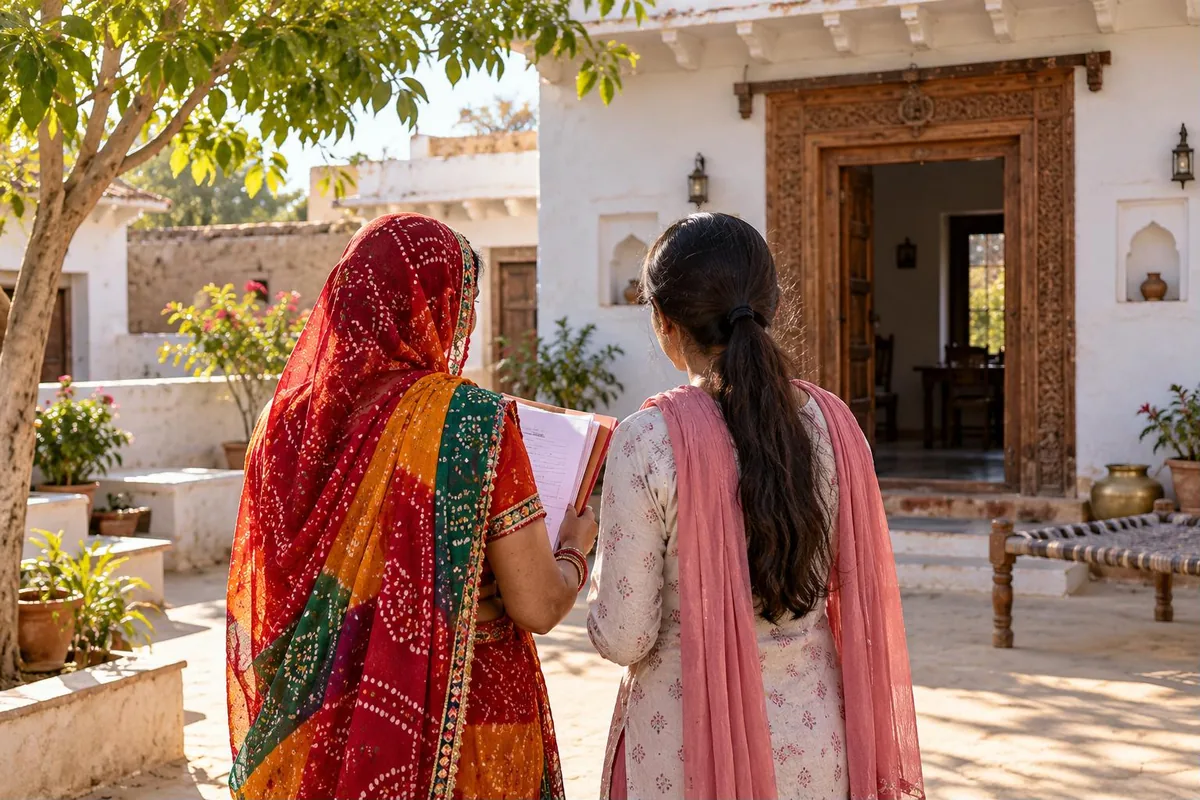
- When buying a house or plot, register it jointly in the names of husband and wife, or in the woman's name.
- After a death in the family, apply for mutation of land records promptly and include all legal heirs, including daughters and the widow.
- Do not sign relinquishment deeds or 'no objection' papers without understanding them; take independent advice.
- Keep copies of property documents, mutation orders and identity papers in a safe place, and make sure the woman knows where they are.
- Check the rules on concessional stamp duty for property registered in a woman's name, which several states, including Rajasthan, have offered.
Village records and new tools
Digitised land records and village property cards are making ownership clearer in rural India. Families can now check land records online and apply for many services without repeated visits to offices. Digital literacy is therefore part of property awareness; I have written earlier about why [digital literacy for rural women](/insights/digital-literacy-for-rural-women-where-skill-development-starts) is where skill development starts.
The role of self-help groups and panchayats
Self-help groups are powerful spaces for women to learn about their rights together and support each other in claiming them. Panchayats can help by holding awareness sessions, assisting with mutation and making sure that women's names are included in records. Women leaders in panchayats, whom I wrote about in [women in panchayat leadership](/insights/women-in-panchayat-leadership-a-100-day-plan-for-a-new-sarpanch), can make this a priority.
When to seek legal help
Property matters can be complicated, especially in joint families or when records are old. If there is a dispute, a pending partition or pressure to give up a share, it is wise to consult a lawyer early. Within the ATTPL group, [ATTPL Legal's property services](https://legal.attplai.com/services/property-legal-services) assist families with title checks, succession, mutation and registration. Women who want to use their land for farming businesses can explore support through [ATTPL Agritech's women agripreneur programme](https://agri.attplai.com/women-agripreneur).
A change in mindset
The most important step is a change in how families think. A daughter's share is not a loss to the family; it is an investment in her security and in the next generation. A wife's name on the house is not a formality; it is recognition of her contribution. When fathers, brothers and husbands support this change, the whole family becomes stronger. You can read more about my approach in my [leadership philosophy](/leadership-philosophy), or [contact me](/contact-us).
Maya's takeaway
Property in a woman's name, alone or jointly, is one of the simplest and most powerful steps a family can take for her security and for the family's future.
Frequently asked questions
Do daughters have an equal right in ancestral property?
Yes. Under the Hindu Succession (Amendment) Act, 2005, daughters are coparceners with the same rights as sons in Hindu joint family property.
What is mutation of land records?
Mutation is the updating of land revenue records to show the new owner after inheritance, sale or gift. It should include all legal heirs.
Is there any benefit to registering property in a woman's name?
Several states, including Rajasthan, have offered concessional stamp duty for women buyers, and many schemes encourage ownership by women. Check current rules before registering.
Sources
This article is general information and a leadership perspective. It is not legal, financial, tax, medical or investment advice. Please consult a qualified professional for your situation. Facts and figures are taken from the public sources listed above and may change.
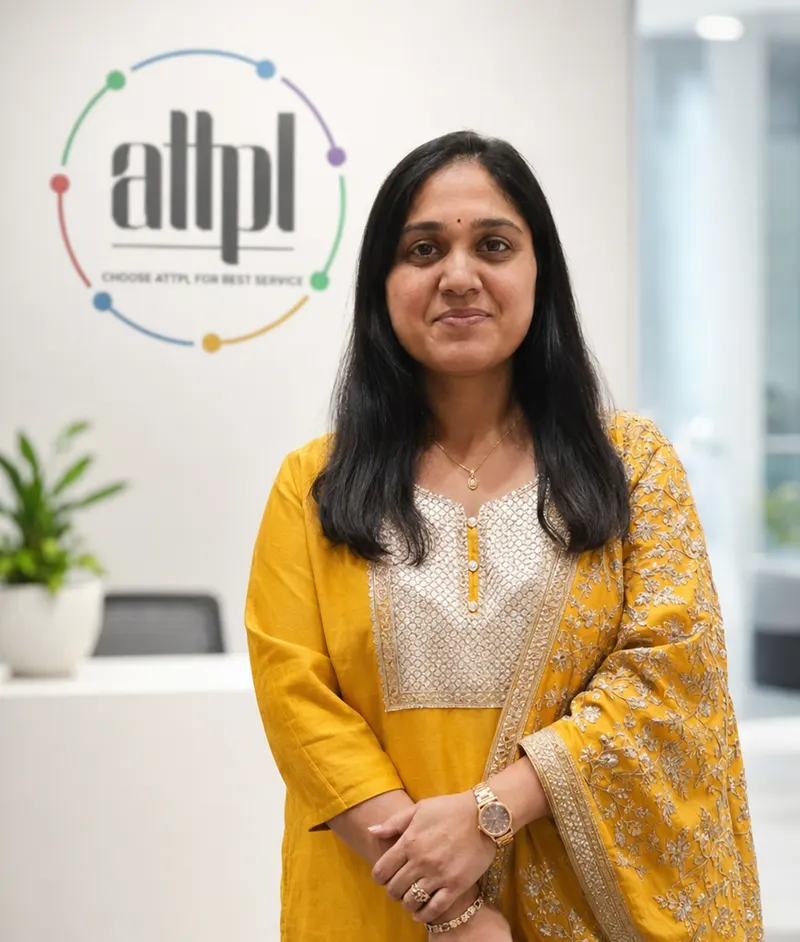
Maya Godara
Co-Founder & Managing Director, ATTPL HOLDCO / ATTPL GROUP, Jaipur, Rajasthan, India.
More from Maya Godara
Financial Literacy for Rural Women: Savings, Insurance and Pensions
A simple guide to financial literacy for rural women: bank accounts, saving habits, low-cost insurance and pension schemes, credit and avoiding fraud.
Read the articleDigital Literacy for Rural Women: Where Skill Development Starts
Why digital literacy is the first step in skill development for rural women, what to teach first, how to run sessions, and how to keep women online safely.
Read the article