
Nutrition for Mothers and Young Children: A Rural Guide
The health of a family often begins with the health of its mothers and youngest children. The period from pregnancy to a child's second birthday shapes growth, learning and long-term health. In many rural homes, mothers eat last and least, and young children move to family food without enough variety. Small changes in daily habits, together with the services already available through anganwadi centres and health workers, can make a lasting difference.
Why the first years matter
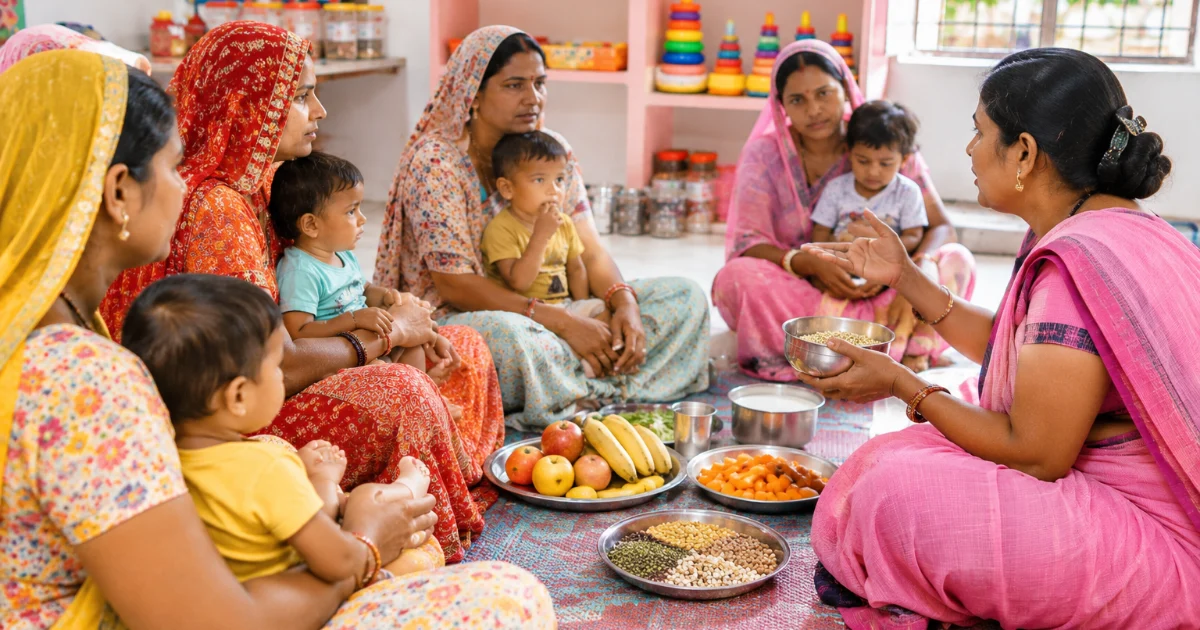
Health experts often speak of the 'first 1,000 days' — from pregnancy until the child turns two. During this time the brain and body grow quickly, and poor nutrition can lead to stunting, weakness and frequent illness that are hard to reverse later. Good food, care and hygiene during these years give children a strong start in school and life.
Food for pregnant women and new mothers
- Eat one extra small meal a day during pregnancy and breastfeeding.
- Include pulses, green leafy vegetables, seasonal fruits, milk or curd and whole grains such as bajra and jowar.
- Take iron-folic acid and calcium tablets as advised by the health worker.
- Use iodised salt in cooking.
- Rest during the day whenever possible and avoid heavy work late in pregnancy.
Families can support mothers by making sure they eat with the family, not after everyone else, and by sharing household work.
Breastfeeding and early feeding
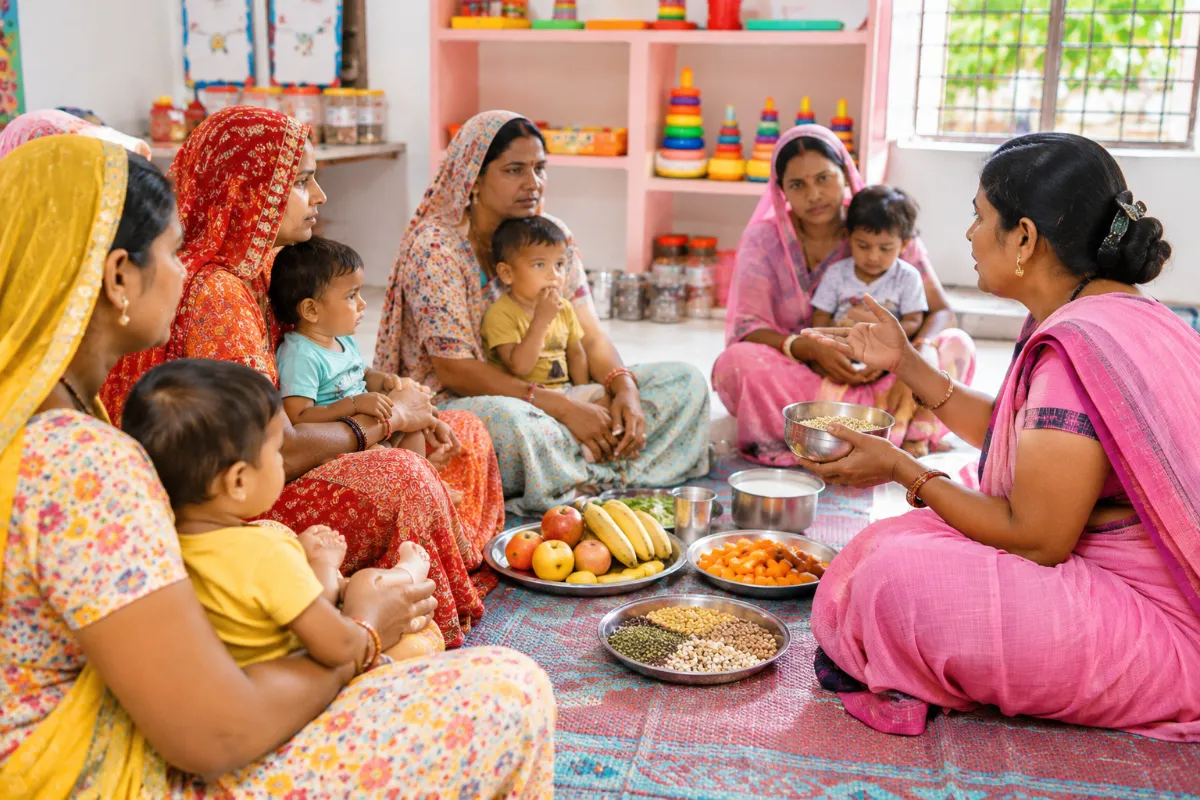
Health guidelines recommend starting breastfeeding within an hour of birth and giving only breast milk for the first six months — no water, honey or other drinks unless advised by a doctor. From six months, children need soft, mashed family foods in addition to breast milk.
- Start with thick dal, mashed vegetables, khichdi and porridge.
- Add a little ghee or oil for energy.
- Increase variety and quantity slowly as the child grows.
- Feed patiently and wash hands before preparing food and feeding.
Using anganwadi and health services
Anganwadi centres under the Integrated Child Development Services provide supplementary nutrition, growth monitoring, immunisation support and health education for children under six, pregnant women and breastfeeding mothers. ASHA workers and auxiliary nurse midwives help with check-ups, vaccinations and referrals. Under schemes such as the Pradhan Mantri Matru Vandana Yojana, eligible mothers can receive cash support; ask the anganwadi worker about current eligibility and documents.
Regular weighing at the anganwadi helps families notice early if a child is not growing well.
Hygiene and clean surroundings
Good nutrition is wasted if children keep falling ill with diarrhoea. Safe drinking water, handwashing with soap, clean toilets and clean cooking spaces protect children. Our articles on [clean cooking and women's health](/insights/clean-cooking-and-womens-health-in-rural-homes) and [water management in villages](/insights/water-women-and-villages-local-water-management) explain how families and communities can improve these basics.
Simple low-cost foods that help
Healthy food need not be expensive. Many traditional and local foods in Rajasthan are highly nutritious when used regularly and in the right combinations.
- Sprouted moong and chana add protein and iron.
- Bajra, jowar and ragi rotis provide energy and minerals.
- Seasonal green leaves such as bathua, methi and palak are rich in iron.
- Curd, buttermilk and milk add calcium and protein.
- Jaggery with roasted chana makes a good snack for mothers.
A kitchen garden with a few vegetables and greens, even in a small space, can supply fresh food through much of the year and reduce costs for the family.
The role of women's groups
Self-help groups and mothers' groups can share recipes using local foods, organise kitchen gardens and remind members about check-ups and vaccination days. When women discuss these topics together, practices change faster across the village. Women panchayat members can also make nutrition and anganwadi facilities part of the village development plan, as described in our [100-day plan for a new sarpanch](/insights/women-in-panchayat-leadership-a-100-day-plan-for-a-new-sarpanch).
Maya's takeaway
Healthy mothers and children need varied local food, breastfeeding support, regular check-ups and clean surroundings — and the anganwadi is a key partner for every family.
Frequently asked questions
How long should a baby be given only breast milk?
Health guidelines recommend only breast milk for the first six months, followed by soft family foods along with continued breastfeeding.
What services does an anganwadi centre provide?
Supplementary nutrition, growth monitoring, immunisation support, pre-school education and health and nutrition counselling for children, pregnant women and mothers.
Which local foods are good for young children?
Mashed dal, khichdi, vegetables, porridge of local grains, curd, seasonal fruits and a little ghee are nutritious and affordable.
Sources
This article is general information and a leadership perspective. It is not legal, financial, tax, medical or investment advice. Please consult a qualified professional for your situation. Facts and figures are taken from the public sources listed above and may change.
Maya Godara
Co-Founder & Managing Director, ATTPL HOLDCO / ATTPL GROUP, Jaipur, Rajasthan, India.
More from Maya Godara
Kitchen Gardens for Better Nutrition in Rural Families
How rural families can grow a kitchen garden (poshan vatika) for better nutrition: choosing plants, saving water, seasons and support.
Read the article