
Selling Online: First Steps for Women Micro-Enterprises
Across Rajasthan, women produce beautiful handicrafts, textiles, pickles, spices and other products at home and in small units. Traditionally, these products reached buyers through middlemen or local fairs, and much of the value stayed with others. Today, a smartphone and a bank account can connect a woman producer with customers far beyond her village. Selling online is not complicated, but it needs planning, patience and attention to quality and trust.
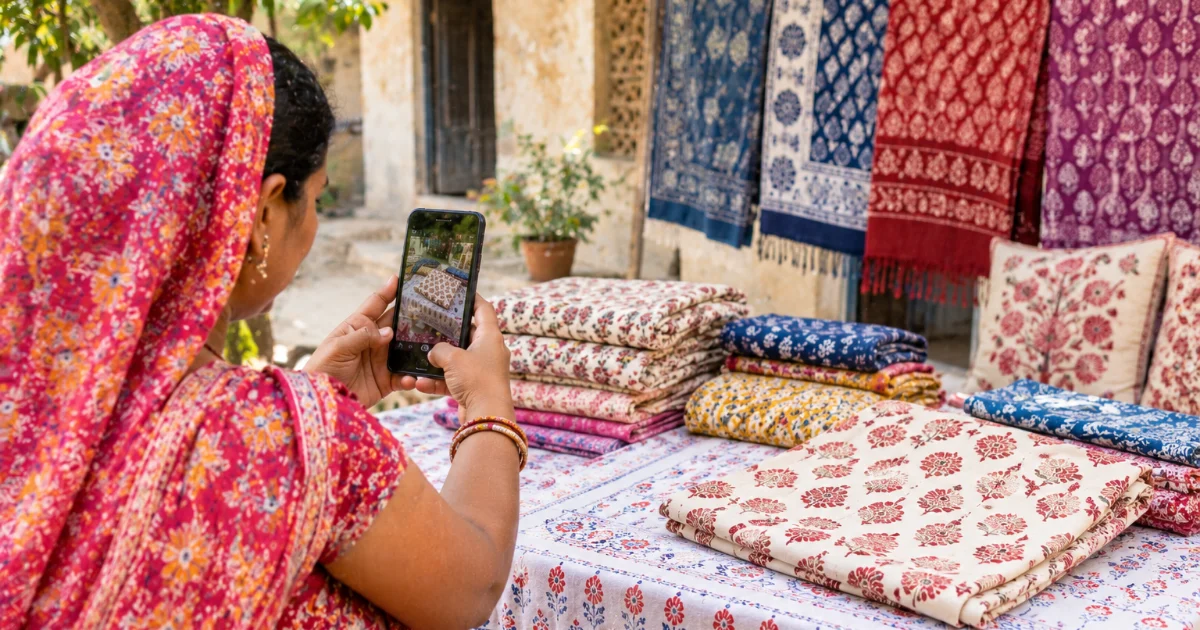
Choose where to sell
- WhatsApp and social media: easiest to start, good for repeat local customers and small catalogues.
- Online marketplaces: reach more buyers, but have fees, rules and competition.
- Government platforms and exhibitions: some government marketplaces and schemes support artisans and self-help group products.
- Your own simple website: useful later, when the business has steady orders.
Most women start with WhatsApp and one marketplace, then add channels as they learn.
Get the basics ready
Before selling, make sure you have a bank account in your own name, UPI for receiving money, a mobile number for business use and, where required, registrations such as Udyam registration for micro-enterprises and GST registration if your turnover or platform rules need it. Food products need FSSAI registration or licence. Our [UPI safety guide](/insights/women-and-digital-payments-upi-safety-guide) explains how to receive payments safely.
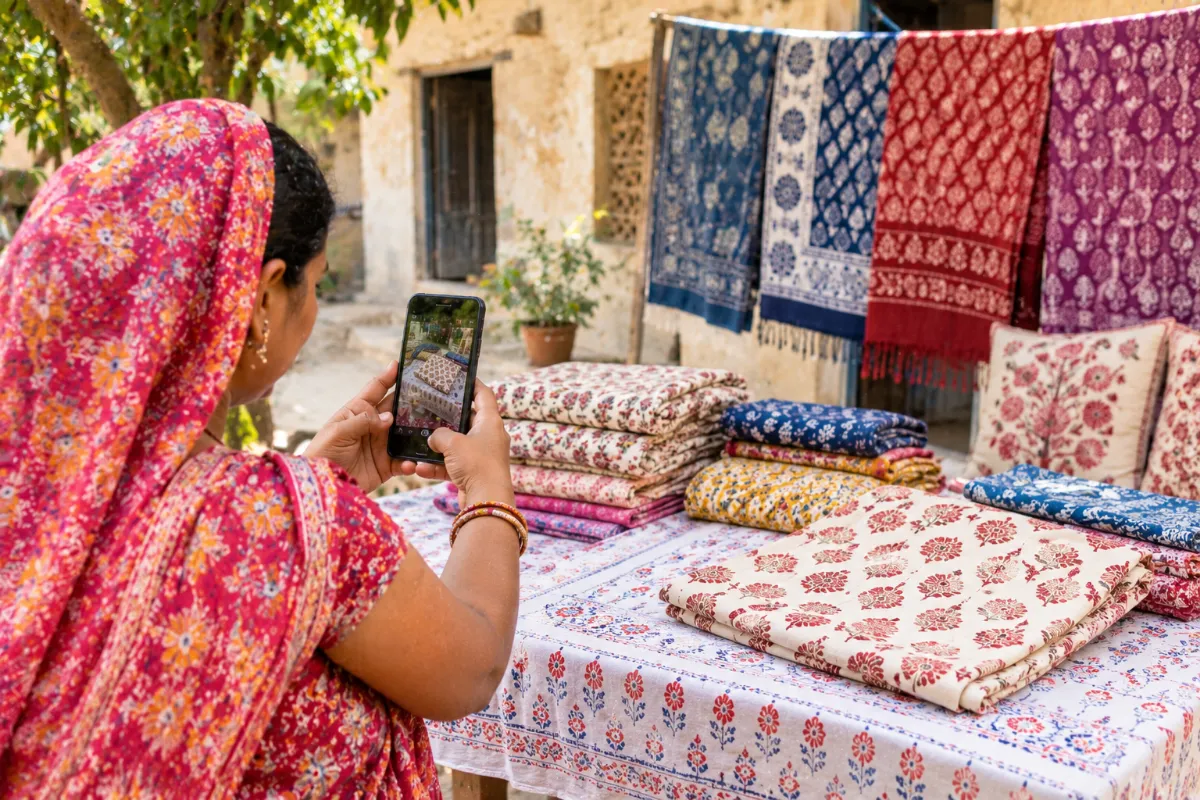
Photographs and descriptions sell the product
- Take photos in daylight against a plain background.
- Show the product from several angles and include a photo that shows its size.
- Write clear descriptions: material, size, colour, care instructions and what makes it special.
- Tell the story briefly — who made it and how — buyers value handmade work.
Honest photos reduce returns and build trust. Never use photos of other people's products.
Price for profit, not just for sales
Calculate the full cost of each product: raw material, your time, packaging, platform fees, delivery and a margin for returns. Many home producers underprice their work and lose money as orders grow. Compare similar products online, but do not compete only on price — quality and finish can justify a fair price. Keep simple records of every sale and expense; our article on [financial confidence for women entrepreneurs](/insights/financial-confidence-for-women-entrepreneurs-credit-score-and-bookkeeping-basics) shows how.
Packing, delivery and customer care
Pack products carefully so that they arrive in good condition, and use the delivery options available through the platform or a reliable courier. Reply to customer messages politely and quickly, share tracking details and handle complaints fairly. A few good reviews in the early months help far more than discounts.
- Keep packing material ready before orders arrive.
- Note each order and dispatch date in a register or app.
- Ask happy customers for a review or referral.
Protect your account and your customers
Online selling brings new risks. Keep your marketplace and social media accounts secure with strong passwords and two-step login, and never share login details or OTPs. Be careful with buyers who ask you to click links or pay a fee to receive an order — genuine platforms do not work this way. Store customer phone numbers and addresses only for delivering their orders, and never share them with others.
- Read the platform's seller policies before listing products.
- Keep invoices and dispatch records for every order.
- Respond to disputes calmly and with evidence such as photos of packed items.
Following these habits protects both your income and your reputation.
Grow together
Women's self-help groups and producer groups can share photography, packaging and delivery costs, buy raw material together and sell under a common brand. Working as a group also builds bargaining power with platforms and suppliers. As our article on [mentoring young women entrepreneurs](/insights/mentoring-young-women-entrepreneurs-a-practical-framework) notes, experienced women can guide newcomers through the first difficult months.
Maya's takeaway
Start small with one or two channels, present products honestly, price for real profit, keep records and grow step by step with the support of other women.
Frequently asked questions
Do I need GST registration to sell online?
It depends on your turnover, the type of product and the platform's rules. Check current GST requirements or ask a tax professional before you start.
What is the easiest way to start selling online?
Many women start with WhatsApp and social media for local customers, then join an online marketplace once they are comfortable.
How should I price handmade products?
Include material, your time, packaging, fees, delivery and a margin for returns, and avoid underpricing your work.
Sources
This article is general information and a leadership perspective. It is not legal, financial, tax, medical or investment advice. Please consult a qualified professional for your situation. Facts and figures are taken from the public sources listed above and may change.

Maya Godara
Co-Founder & Managing Director, ATTPL HOLDCO / ATTPL GROUP, Jaipur, Rajasthan, India.
More from Maya Godara
Loan Schemes for Women Entrepreneurs in India: A Practical Guide
Government-backed and bank loan options women entrepreneurs can explore — Mudra, Stand-Up India, CGTMSE-backed credit and SHG bank linkage — with tips to prepare a strong application.
Read the articleWork–Life Balance for Women Entrepreneurs: Practical Habits
Practical habits that help women entrepreneurs balance business growth, family responsibilities and their own health, without guilt or burnout.
Read the articleMentoring Young Women Entrepreneurs: A Practical Framework
A practical framework to mentor young women entrepreneurs: goals, skills and confidence, access to finance and markets, and regular reviews.
Read the article