
Anganwadi Services: What Mothers and Young Children Can Get
In almost every village and urban ward, the Anganwadi centre is the first public service a mother and child meet. Many families still do not use all the services it offers. Knowing what is available helps every child get a healthier start.
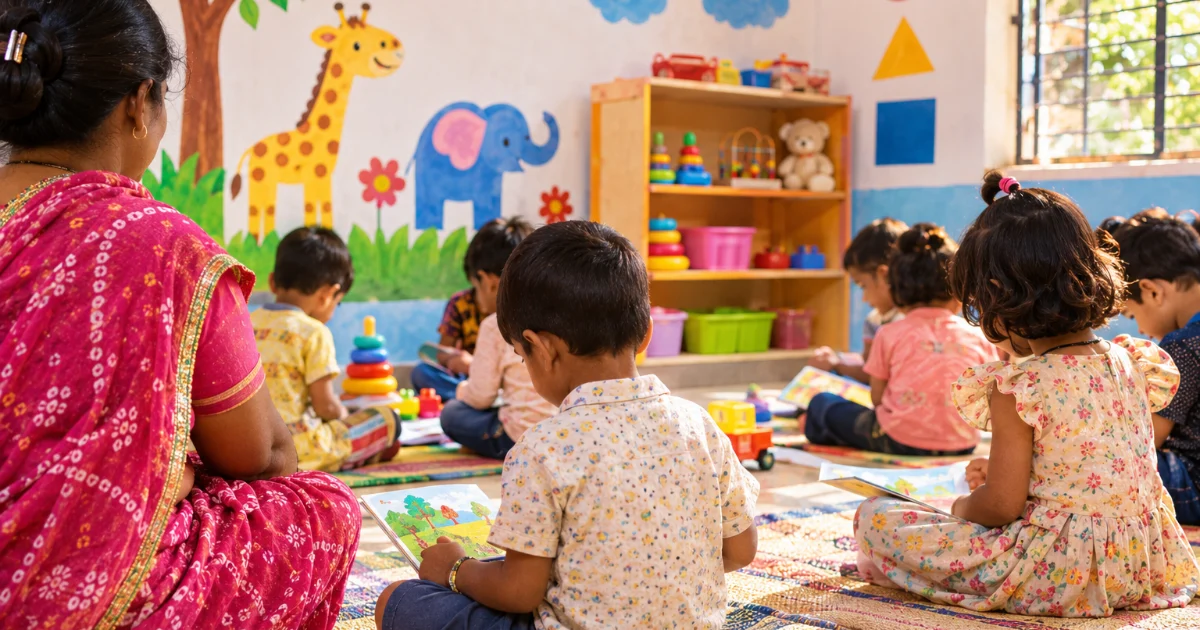
Who Anganwadi services are for
Anganwadi centres, run under the Ministry of Women and Child Development's Mission Saksham Anganwadi and Poshan 2.0, serve children up to six years of age, pregnant women and breastfeeding mothers, and adolescent girls in certain areas. Services are delivered by the Anganwadi worker and helper, with support from health workers such as ASHAs and ANMs.
Services offered
- Supplementary nutrition — hot cooked meals or take-home ration as per norms
- Growth monitoring, with weight and height recorded regularly
- Support for immunisation and health check-ups with the health department
- Nutrition and health counselling for mothers
- Early childhood care and pre-school education for children aged 3–6
- Referral services for sick or undernourished children
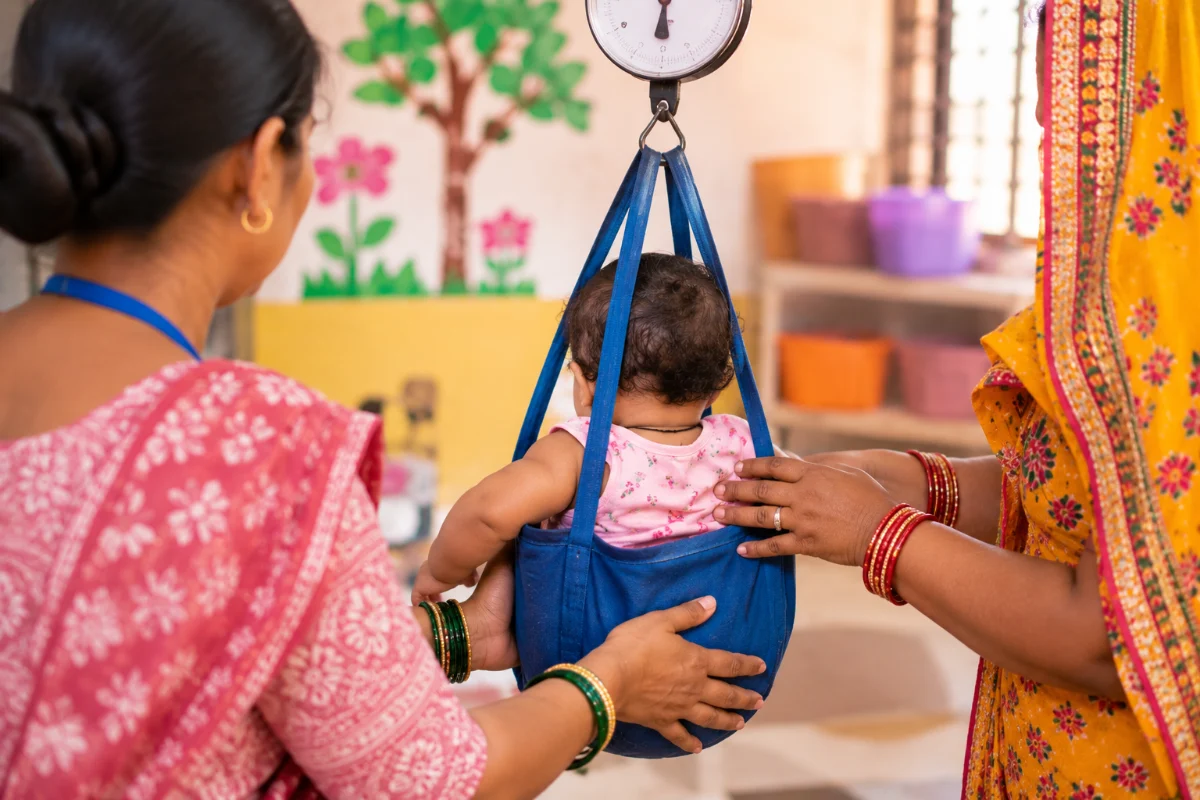
How to enrol
Visit your nearest Anganwadi centre with Aadhaar or other identity documents and register the pregnant woman, mother or child. Beneficiary details are increasingly recorded on the Poshan Tracker app, so keep your mobile number updated. Ask the Anganwadi worker about any state schemes you may be eligible for, including maternity support schemes.
Getting the most from the centre
Attend community events and Village Health, Sanitation and Nutrition Days. Track your child's growth chart and ask questions if weight is not increasing. Good nutrition at home matters too — our guides on [nutrition for mothers and children](https://mayagodara.com/insights/nutrition-for-mothers-and-children-rural-guide) and [kitchen gardens](https://mayagodara.com/insights/kitchen-garden-nutrition-rural-families) offer simple ideas.
Role of the panchayat
Gram panchayats can strengthen Anganwadi services by monitoring infrastructure, water and toilets at centres, and by discussing nutrition in the gram sabha. The [Gram Panchayat Development Plan guide](https://attplems.com/blog/gram-panchayat-development-plan-gpdp-guide-for-sarpanch) from ATTPL EMS explains how such needs can be included in local planning.
Health support
For check-ups and tests beyond what the centre provides, families can consult [ATTPL Health](https://health.attplai.com/), which also explains [adult vaccination](https://health.attplai.com/blog/adult-vaccination-guide-india) for mothers and family members.
Maya's takeaway
Frequently asked questions
Who can get services at an Anganwadi centre?
Children up to six years, pregnant women, breastfeeding mothers and, in some areas, adolescent girls.
Is there any fee for Anganwadi services?
No. Anganwadi services are provided free of cost by the government.
What is take-home ration?
Packaged supplementary food given to eligible beneficiaries to prepare at home, as per programme norms.
Sources
This article is general information and a leadership perspective. It is not legal, financial, tax, medical or investment advice. Please consult a qualified professional for your situation. Facts and figures are taken from the public sources listed above and may change.
Maya Godara
Co-Founder & Managing Director, ATTPL HOLDCO / ATTPL GROUP, Jaipur, Rajasthan, India.
More from Maya Godara
PM Matru Vandana Yojana: A Simple Guide for Pregnant Women and Families
How PMMVY supports pregnant women and new mothers: who is eligible, what benefit is paid, documents needed, how to apply through the Anganwadi and how to track payment.
Read the articleHealth Insurance for Women and Families: What to Know Before You Choose
A simple guide to health insurance for women and families in India — government schemes, family floater policies, maternity cover, waiting periods, exclusions and how to claim.
Read the articleKitchen Gardens for Better Nutrition in Rural Families
How rural families can grow a kitchen garden (poshan vatika) for better nutrition: choosing plants, saving water, seasons and support.
Read the article